
Welcome to the Crustaceans subsite on Invertebrate Paleontology!
Please enter a genera name to retrieve more information.
Phacorhabdotus
Classification
Phylum:
Arthropoda
Subphylum:
Crustacea (superclass)
Class:
Ostracoda
Order:
Podocopida
Suborder:
Podocopina
Superfamily:
Cytheracea
Family:
Trachyleberididae
Formal Genus Name and Reference:
Phacorhabdotus Howe & LAURENCICH, 1958
Type Species:
P. texanus
Images
(Click to enlarge in a new window)
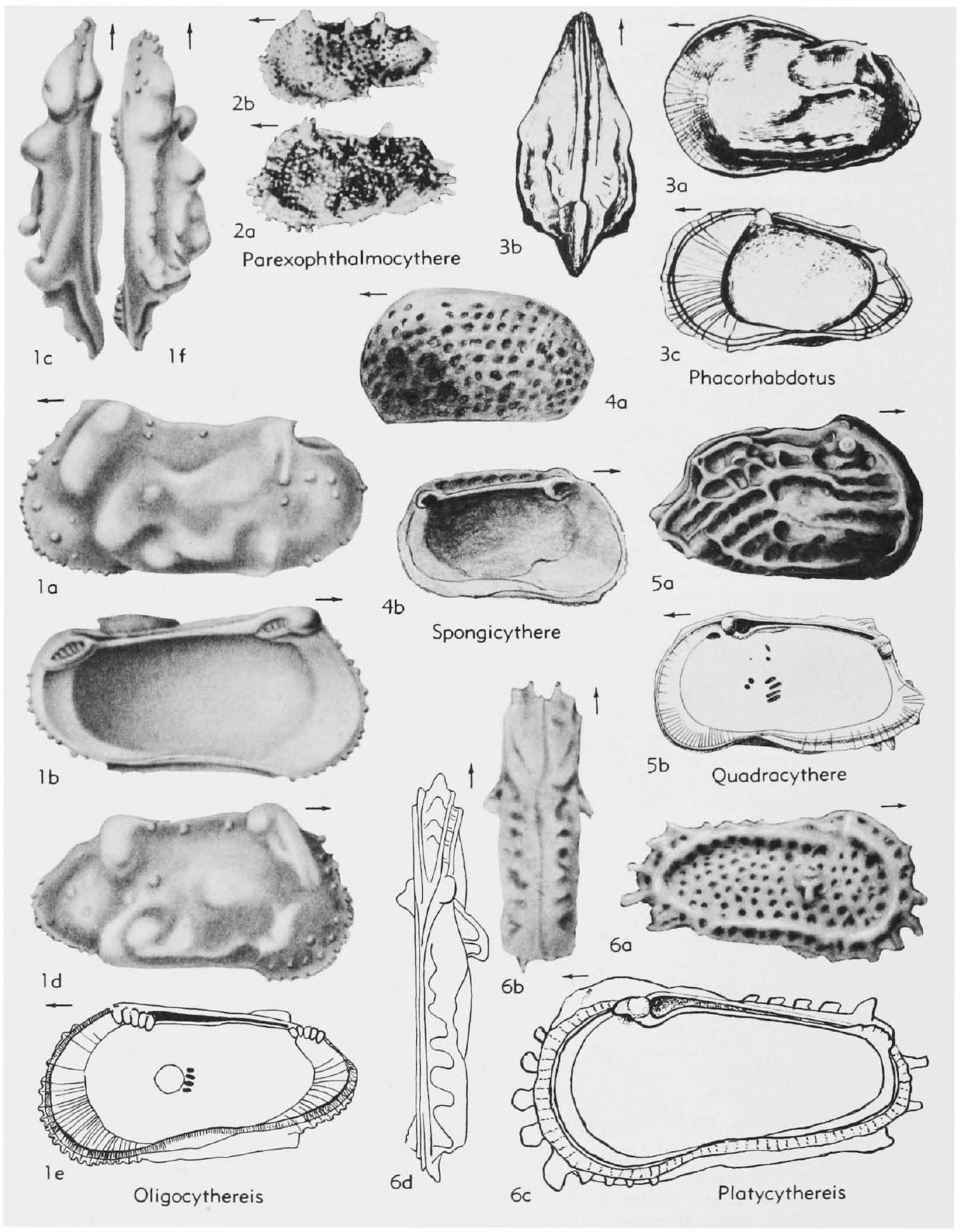 Fig. 264,3. *P. texanus, Pecan Gap Chalk, USA(Tex.), 3a,b, carapace L, dors., 3c, RV int., all X60 (34).
Synonyms
Geographic Distribution
N.Am.-Eu.
Age Range
Beginning Stage in Treatise Usage:
U. Cret.
Beginning International Stage:
Cenomanian
Fraction Up In Beginning Stage:
0
Beginning Date:
100.5
Ending Stage in Treatise Usage:
U. Cret.
Ending International Stage:
Maastrichtian
Fraction Up In Ending Stage:
100
Ending Date:
66.04
Description
Hinge holamphidont, Like Costa but less elongate, smoother, with ribs less well defined, subcentral tubercle wider, and wider duplicature. Eye tubercle present but indistinct
References
\& Laurencich, Laura, 1958, Introduction to the Study of Cretaceous Ostracoda: Louisiana State Univ. Press, 536 p., fig. (Baton Rouge).
Museum or Author Information
Classification
Phylum:
Arthropoda
Subphylum:
Crustacea (superclass)
Class:
Ostracoda
Order:
Podocopida
Suborder:
Podocopina
Superfamily:
Cytheracea
Family:
Trachyleberididae
Formal Genus Name and Reference:
Phacorhabdotus Howe & LAURENCICH, 1958
Type Species:
P. texanus
Images
(Click to enlarge in a new window)
Fig. 264,3. *P. texanus, Pecan Gap Chalk, USA(Tex.), 3a,b, carapace L, dors., 3c, RV int., all X60 (34).
Synonyms
Geographic Distribution
N.Am.-Eu.
Age Range
Beginning Stage in Treatise Usage:
U. Cret.
Beginning International Stage:
Cenomanian
Fraction Up In Beginning Stage:
0
Beginning Date:
100.5
Ending Stage in Treatise Usage:
U. Cret.
Ending International Stage:
Maastrichtian
Fraction Up In Ending Stage:
100
Ending Date:
66.04
Description
Hinge holamphidont, Like Costa but less elongate, smoother, with ribs less well defined, subcentral tubercle wider, and wider duplicature. Eye tubercle present but indistinct
References
\& Laurencich, Laura, 1958, Introduction to the Study of Cretaceous Ostracoda: Louisiana State Univ. Press, 536 p., fig. (Baton Rouge).